Getting Started
Freeze-Dried vs Frozen Raw Dog Food: How to Choose
3.1.2023
Freeze-dried vs frozen raw dog food both give your dog raw nutrition, but they fit into your day differently. Frozen raw keeps its natural moisture and needs freezer space, while freeze-dried raw stores in the pantry and doesn’t need time to thaw.
At Vital Essentials, we offer complete and balanced freeze-dried raw dog food and frozen raw dog food, so you can choose based on your dog, your routine, and how you prefer to feed.
Key Takeaways
● Freeze-dried and frozen raw can start with the same raw ingredients. Freeze-drying removes moisture without cooking the food.
● Frozen raw needs freezer space and time to thaw. Freeze-dried raw stores in a cool, dry place and works well when you need an easy meal away from home.
● Freezing and freeze-drying preserve raw food, but neither process acts as a pathogen-killing step on its own. Handle both as raw food.
● Cost varies by recipe and package size, so neither type is always the cheaper choice.
● Check the nutritional adequacy statement to see whether a food can serve as your dog’s complete diet.
What’s the Difference Between Frozen and Freeze-Dried Raw?
Frozen raw keeps the moisture naturally found in its ingredients. Freeze-drying removes most of that moisture after freezing, so the food can be stored in a cool, dry place instead of a freezer.
You’ll notice the difference as soon as you pick up the packages. Frozen raw feels heavier and has a soft, moist texture once thawed.
Freeze-dried raw feels light and dry and can stay in your pantry until you’re ready to feed it.
Removing most of the water makes freeze-dried raw lighter by weight while concentrating more food into each ounce. That means an ounce of freeze-dried raw will typically contain more calories than an ounce of a comparable frozen raw food, where a lot of the weight comes from moisture.
Is Freeze-Dried Dog Food Still Raw?
Yes. Freeze-dried raw dog food is still raw food.
Freeze-drying starts with frozen food. Under a vacuum, the frozen water turns directly into vapor instead of melting into liquid first. This process is called sublimation.
Once most of the water leaves, the food becomes light, dry, and porous. Add water, and the food readily absorbs moisture again, although you shouldn’t expect it to return to exactly the same texture it had before freeze-drying.
Removing moisture also allows you to store freeze-dried raw without a freezer before you serve it. Keep the package tightly closed and follow the storage directions on the bag.
Both freeze-dried and frozen raw food start with raw ingredients, so storage, prep, cost, and the way the food fits into your dog’s routine make more useful differences to compare.
How Frozen Raw Stays Fresh
Frozen raw uses cold temperatures to keep the food preserved until your dog is ready to eat it.
Keep the food frozen, then move the portion you need into the refrigerator and let it thaw there. Freezing keeps microorganisms from growing while the food stays frozen, but it doesn’t make raw food sterile. Safe refrigerator thawing keeps the food cold throughout the process.
Skip thawing raw food on the kitchen counter.
Once the food thaws, keep unused portions refrigerated and use them within the time listed on the package.
We also have more tips for storing raw pet food if you keep both frozen and freeze-dried meals at home.
Feeding, Rehydration, and Portioning
Don’t match frozen and freeze-dried portions ounce for ounce. Freeze-dried raw is more concentrated by weight, so use the calorie information and feeding directions for the specific food you’re serving.
Pet food labels include calorie and feeding information that can help you choose a starting portion for your dog.
For frozen raw, portion your dog’s meal and thaw it in the refrigerator before serving.
Freeze-dried raw gives you a little more flexibility. Depending on the product directions, you can serve it dry or add water before it goes into the bowl. Rehydration softens the food and adds moisture back into the meal.
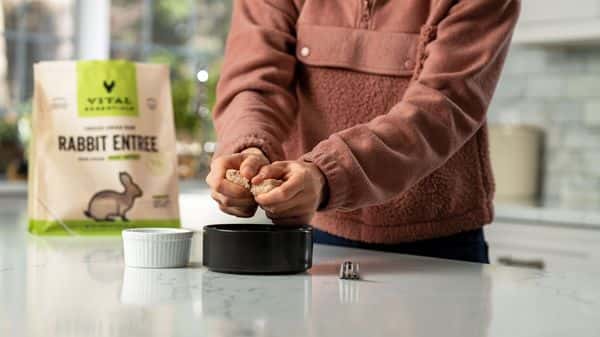
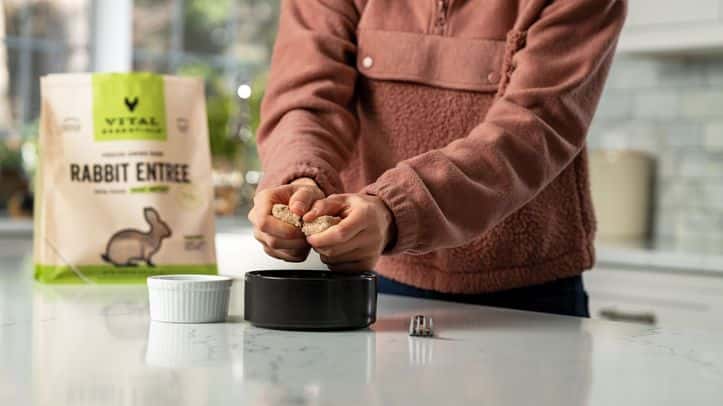
Our freeze-dried Mini Patties, for example, are easy to crumble before adding water.
Once you thaw frozen raw or rehydrate freeze-dried raw, treat the food as perishable. Refrigerate unused portions promptly and follow the package directions for leftovers.
If you feed several pets, portion each meal for the animal eating it. Dogs and cats have different nutritional needs even when their foods contain similar animal proteins. We also offer freeze-dried raw cat entrées for pet parents feeding raw to both.
Check Whether the Food Is Complete and Balanced
Frozen and freeze-dried tell you how the food is stored or prepared. They don’t tell you whether it gives your dog everything needed for a complete diet.
Check the nutritional adequacy statement on the label. It tells you whether the food is complete and balanced and which species and life stage it’s made for.
This helps you tell a complete meal apart from a treat, topper, mixer, or supplement. A product can contain nutritious raw animal ingredients without serving as a complete diet on its own.
Always choose food for your dog’s species and life stage. For a puppy, that means looking for a nutritional adequacy statement that covers growth or all life stages.
Large-breed puppies have specific needs while they grow. Talk with your veterinarian about calories, calcium, phosphorus, and the right food for your puppy.
How Does Cost Compare?
The cost can vary by recipe, package size, and where you buy your dog’s food, so price per pound doesn’t always give you a good comparison between frozen and freeze-dried raw.
Freeze-dried raw has most of its moisture removed, which means you’re getting more calories in a lighter package. Frozen raw keeps its natural moisture, so the package weighs more even when the foods start with similar raw ingredients.
The benefits can start when raw food makes up just 20% of the bowl. You can start by replacing part of your dog’s current meal instead of changing the whole bowl at once.
For example, you might use our frozen Beef Patties for regular meals at home, add freeze-dried Beef Patties to your dog’s current meals, or use both depending on what works best that day.
Overall cost also goes beyond the price on the package. Freezer space, storage, prep time, and how much food your dog eats can all affect which option works better for you.
Why Both Need Raw-Food Handling
Handle frozen and freeze-dried raw with the same basic food-prep habits.
Freezing doesn’t sterilize raw food, and freeze-drying by itself doesn’t act as a pathogen-killing step.
Wash your hands after preparing your dog’s meal. Clean bowls, scoops, utensils, and counters that touch raw food, and keep your pet-food prep away from food you’re preparing for people. The same raw food handling practices apply to both choices.
If your home includes young children, older adults, someone who is pregnant, or anyone with a weakened immune system, you may need extra precautions. Talk with your veterinarian and medical provider if you have questions about raw feeding in your household.
Safe raw feeding also starts with the company making the food.
Ask brands how they:
● Review ingredient suppliers and trace ingredients through production.
● Manage sanitation and test products or production areas for pathogens.
● Eliminate pathogens in the finished product.
At Vital Essentials, we own and operate our manufacturing facilities. Our safety system includes carefully reviewed suppliers, sanitation practices, testing, traceability, third-party certifications, and E-Beam Technology as a final pathogen-reduction step.
Since 2015, our manufacturing has also held FSSC 22000 food safety certification, a globally recognized standard that looks at how food safety is managed from sourcing through production.
Which One Fits Your Household?
Frozen raw may work best as your everyday choice if you have the freezer space and don’t mind planning ahead to thaw meals. On the other hand, freeze-dried raw can be more useful for travel, boarding, shared feeding duties, or busy days when you want a meal ready without thawing.
You can also use both. Frozen raw may handle most meals at home, while freeze-dried raw stays ready in the pantry for travel, pet sitters, busy days, or the nights you forget to thaw dinner.
You can choose a style that works with the way your dog likes to eat, too. Our Mini Patties can be broken or crumbled into the bowl, while our Nibs come in smaller pieces that are easy to scoop and portion.
Browse all our raw dog food or find Vital Essentials near you to see which frozen and freeze-dried options fit your routine.
Frequently Asked Questions
Do vets recommend freeze-dried raw?
Veterinary opinions on raw feeding vary. The FDA notes that raw pet food can carry harmful bacteria, which makes pathogen-reduction practices and safe handling important.
At Vital Essentials, we use E-Beam Technology as the final pathogen-reduction step for our raw foods, along with strict supplier standards, sanitation, and testing in our food-safety processes.
If you want to feed freeze-dried raw, talk with your veterinarian about your dog’s age, health, nutritional needs, and any medical concerns.
Can puppies eat freeze-dried raw?
Yes, when the food is complete and balanced for growth or all life stages.
Check the nutritional adequacy statement before using freeze-dried raw as your puppy’s complete diet. If you have a large-breed puppy, talk with your veterinarian about calorie intake and mineral levels during growth.
What is a kill step?
A kill step is a tested process used to reduce harmful microorganisms by a specific amount. Freezing and freeze-drying preserve food, but neither works as a kill step on its own.
At Vital Essentials, we use E-Beam Technology as the final pathogen-reduction step in our food safety process.
How long does freeze-dried raw food last once opened?
Follow the storage directions on the package.
How long an opened bag lasts can vary by product and packaging. Close the bag tightly after every meal, keep it somewhere cool and dry, and keep moisture out until you’re ready to feed your dog.
Can frozen raw and freeze-dried raw be fed on the same day?
Yes. Just count both meals toward your dog’s daily calorie needs. If your dog already eats frozen raw and you’re adding freeze-dried food, starting with the same protein can keep the change simple. For example, you could move from frozen beef to freeze-dried beef before trying a new protein at the same time.
Once your dog adjusts, you can work both into your feeding routine based on your dog’s daily needs.